AI Receptionist vs. Virtual Assistant: Which Is Better for Solo Professionals?
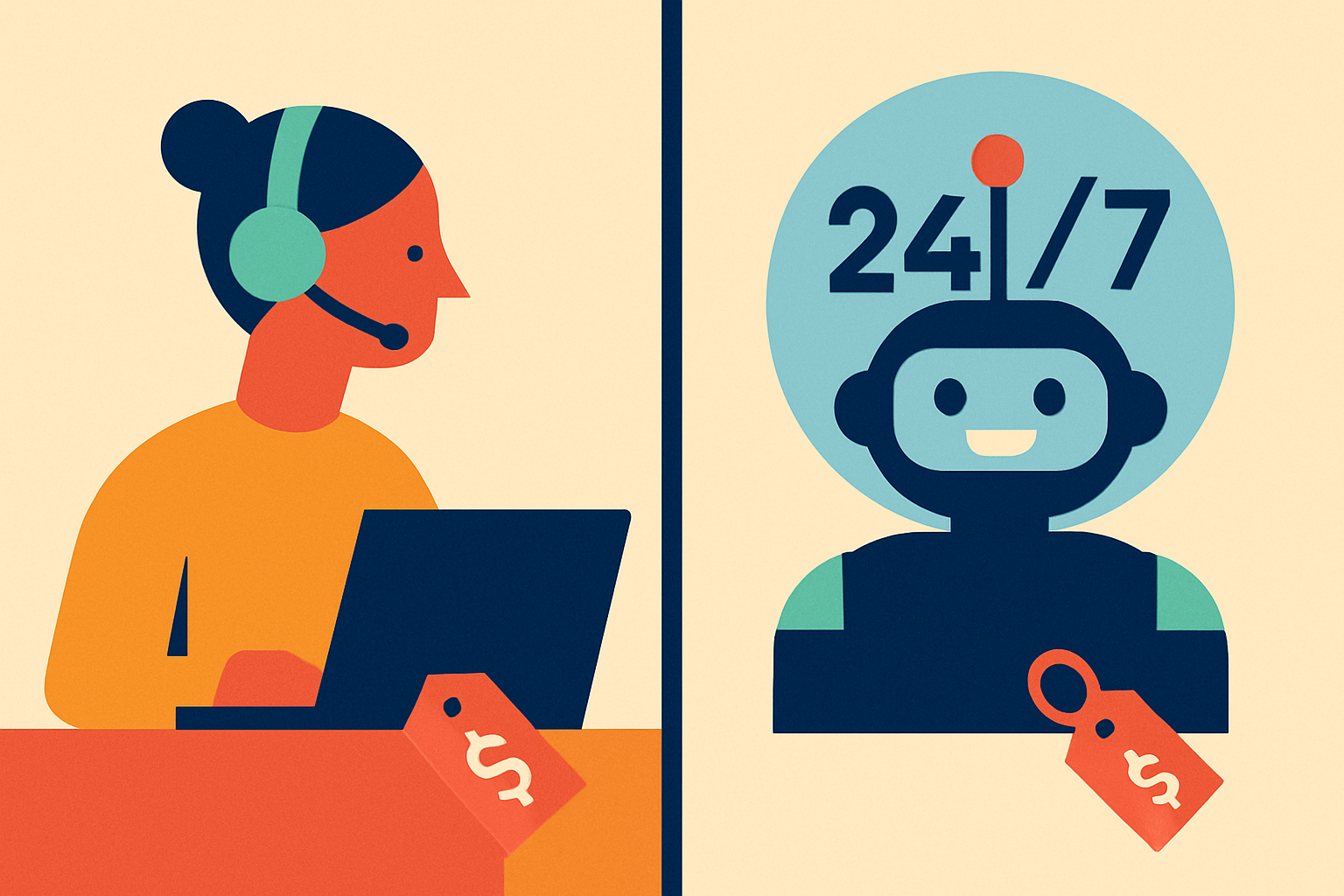
Solo professionals increasingly face the same challenge: they need help with communication and scheduling, but a full-time employee is out of the question.
Two options have emerged as viable: virtual assistants (human, remote) and AI receptionists (software). Both solve versions of the same problem — but they solve different parts of it. Choosing the wrong one wastes money or leaves important needs unmet.
What Is a Virtual Assistant?
A virtual assistant (VA) is a remote human worker who handles administrative tasks. For solo professionals, this typically means:
- Answering calls and emails
- Managing calendar and bookings
- Following up with leads
- Basic CRM and admin tasks
- Social media scheduling
Cost: $500-$1,500/month for part-time (10-20 hours/week), depending on skill level and location.
Availability: Business hours in the VA's time zone. Some VAs work flexible hours, but 24/7 coverage requires multiple VAs.
What Is an AI Receptionist?
An AI receptionist is a software tool (like BotChap) that handles the first layer of client communication automatically:
- Answering questions from your uploaded content (services, pricing, FAQ)
- Booking appointments through a structured intake flow
- Responding to inquiries via website chat, direct link, or QR code
- Operating 24/7 without supervision
Cost: $9.59-$79/month depending on the plan.
Availability: 24/7, every day of the year.
The Comparison
| Capability | Virtual Assistant | AI Receptionist | |---|---|---| | Monthly cost | $500-$1,500 | $8-$40 | | Working hours | Business hours | 24/7 | | Response time | Minutes to hours | Seconds | | Handles complex requests | Yes | No | | Phone calls | Yes | No (chat only) | | Empathy and nuance | Yes | Limited | | Setup time | Weeks (training) | 1-2 hours | | Scales with volume | Requires more hours | Unlimited |
When to Use an AI Receptionist
An AI receptionist makes sense when:
- You're getting a consistent volume of similar questions (services, pricing, availability)
- Most of your inquiries come through digital channels (website, Instagram, email links)
- You want 24/7 coverage without the cost of a human
- The majority of interactions are informational or routine booking requests
For most solo professionals with fewer than 20 new client inquiries per week, an AI receptionist handles 70-80% of interactions without human input. The cost savings vs. a VA are substantial.
When to Use a Virtual Assistant
A VA makes sense when:
- You need phone support (AI receptionists are text/chat only)
- Your inquiries involve complex judgment or nuance (e.g. complex legal or medical intake)
- You need help with tasks beyond communication (research, data entry, social media)
- Volume is high enough that a human's judgment materially improves outcomes
A VA is also the right choice if you've grown to the point where AI can't handle the variety or complexity of what comes in.
The Hybrid Approach
Many solo professionals use both: an AI receptionist for the first layer (24/7 Q&A and routine booking requests) and a part-time VA for follow-up, complex requests, and tasks the AI can't handle.
This hybrid approach is often the sweet spot: the AI handles the volume; the VA handles the complexity. Total monthly cost is typically $600-$800 vs. $1,500+ for a VA alone.
Recommendation
Start with an AI receptionist. It costs almost nothing and takes under an hour to set up. If you find after a month that it's handling most of your volume well, you've saved hundreds of dollars.
Add a VA only when the nature of your inquiries — complexity, phone calls, task variety — consistently exceeds what the AI can handle. By then, you'll know exactly what to hire for.