QR Code Marketing for Handymen: A Practical Guide
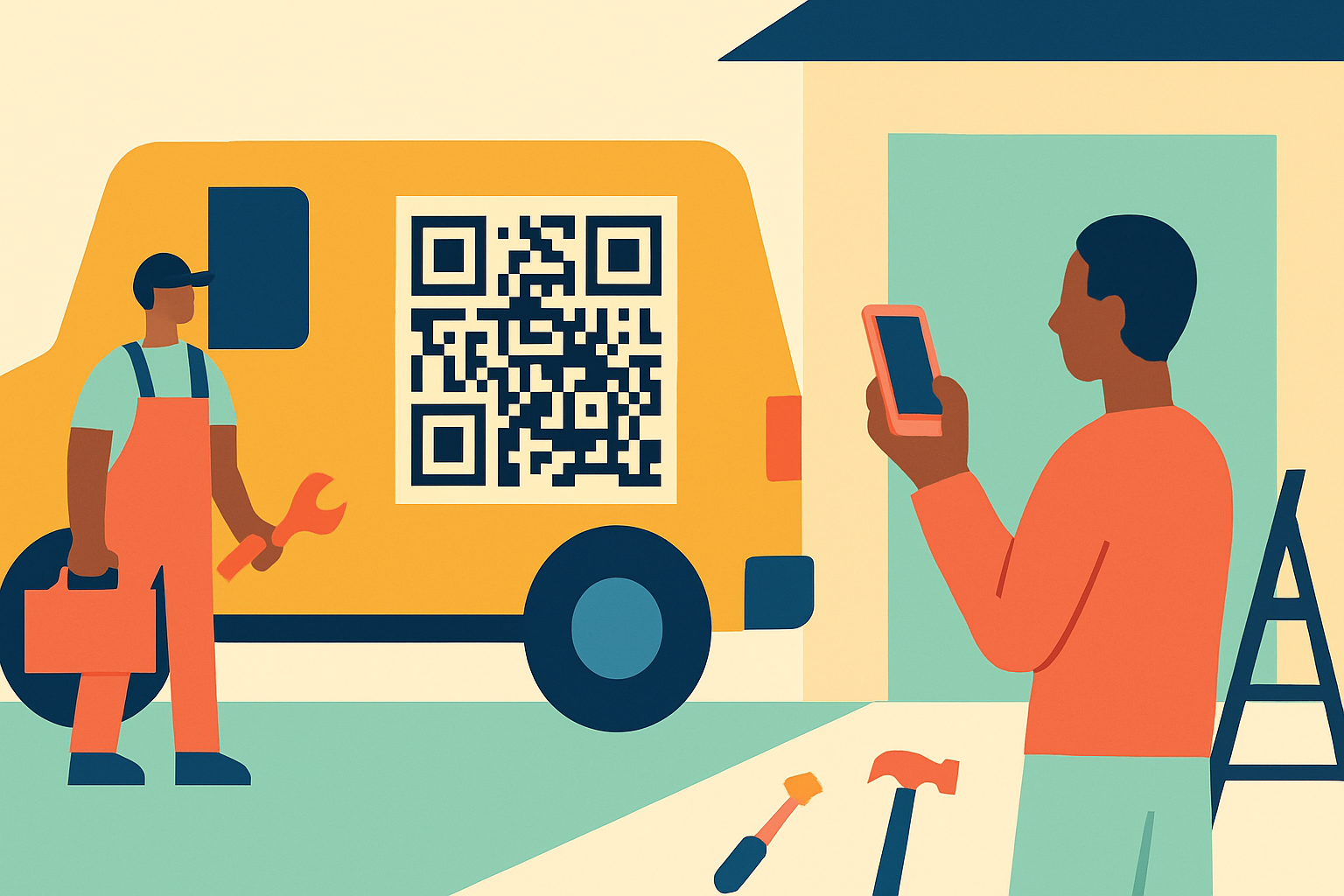
Every time you work on a job, you're visible to the neighbourhood. Your van is parked outside. Your yard sign is up. Neighbours walk past and think "I've been meaning to get that fixed."
Most of them don't act on it. Not because they don't need the work done — but because the moment passes and there's no frictionless next step.
A QR code changes that.
Why QR Codes Work for Tradespeople
QR codes have seen a massive resurgence since 2020. Smartphones can now scan them natively without an app. The action from "see QR code" to "viewing content" takes about 3 seconds.
For handymen, plumbers, electricians, and general contractors, this creates an opportunity that didn't exist five years ago:
Your van, your yard sign, your work uniform, and your business card can all become instant lead generation tools.
Where to Put Your QR Code
1. Your Van — Back Window Sticker The most high-visibility placement. A weather-resistant vinyl sticker on your rear window is visible at every traffic light, in every neighbourhood where you park, and whenever someone sees your van while you're on a job. Homeowners who've been putting off calling a handyman suddenly have a zero-friction way to reach out.
2. Job Site Yard Sign While you're working on a job, a yard sign with your QR code broadcasts your availability to the entire street. Neighbours who have similar work to do see live proof of your work quality and can immediately contact you.
3. Business Cards Traditional business cards get lost. A QR code on the card means the recipient can scan it instantly — when the conversation is still warm — and your AI handles the initial intake without requiring you to follow up.
4. Property Photos You Leave Behind After completing a job, leave behind a small card with a QR code. If the homeowner refers you to a friend or neighbour and they ask "how do I get in touch?", the answer is immediate.
5. Flyers in Target Neighbourhoods Physical flyer drops in high-value neighbourhoods still work for trades. A QR code on the flyer is significantly more effective than a phone number alone — it provides an instant, zero-pressure way to start a conversation.
What the QR Code Should Link To
The QR code should link to a page — or better, an AI chatbot — that does four things:
- Confirms what services you offer
- Answers the most common questions (area coverage, pricing approach, availability)
- Collects the job request details
- Notifies you immediately
A plain website works, but it's passive. An AI chatbot is active — it engages the person who scanned, asks follow-up questions, and collects structured information before you ever pick up the phone.
When you get a notification from an AI-collected job request, you already know: what the job is, where it is, what the timeline looks like, and how to contact the client. The first call is a warm call, not a cold one.
The Numbers
Based on typical conversion rates for trade lead channels:
- Cold phone call: ~10% conversion to booked job
- Business card with phone number: ~15% (high friction — requires them to call)
- QR code to AI chatbot: ~35-45% (low friction, immediate engagement, structured intake)
The improvement comes entirely from reducing friction and ensuring immediate response.
Getting Started
You need three things:
- A BotChap account (free to start, AI features from $9.59/month)
- A document with your services, coverage area, and common questions
- A printable QR code (generated automatically by BotChap)
From there, print a sticker for your van at any print shop for under $10, and your passive marketing is running 24/7.